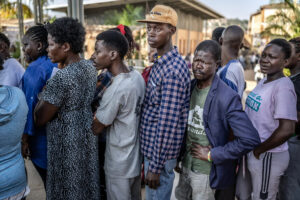


The Robert & Ethel Kennedy Human Rights Center and the Centre for Law and Democracy have published a new joint report identifying key gaps in human rights jurisprudence on the right to freedom of peaceful assembly and outlining strategic litigation opportunities to address them.
Titled Freedom of Peaceful Assembly: Litigation Gaps and Opportunities at the International and Regional Levels, the report provides an in-depth assessment of the standards developed by international, regional, and subregional human rights mechanisms, with a focus on the UN System, Africa and the Americas. Despite the existence of fairly developed catalogues of key standards, the jurisprudence in these systems remains limited and fragmented, leaving critical questions unresolved.
In response, the report maps priority areas for legal development, including the scope of the right, States’ positive obligations to facilitate and protect assemblies, permissible restrictions, and accountability and redress. It also highlights key strategic considerations for litigation, such as avoiding marginalization of assembly claims and identifying fact patterns that bring under-addressed issues to the forefront.
This report serves as a practical resource for lawyers, advocates, researchers, and civil society actors seeking to strengthen protections for freedom of assembly through strategic litigation and legal advocacy.
Read the full report, or watch the launch webinar below.
Related Content
Iran’s Repression of Protesters Demands International Protection and Accountability
This Week’s Spotlight on Human Rights
Uganda: Authorities Must Desist from Attacks on Civic Space and Investigate 2026 Electoral Period Violations